
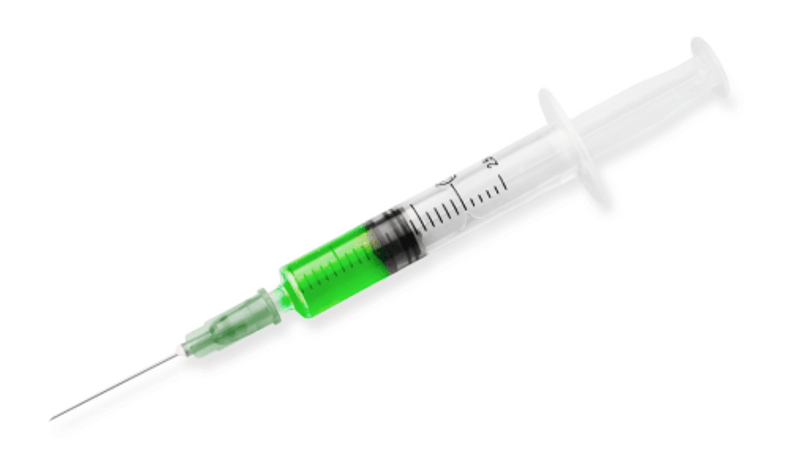
Yes, you can travel with syringes. The TSA allows unused syringes in carry-on baggage when they are accompanied by injectable medication, and you must declare them to a security officer at the checkpoint for inspection. There is no limit on the number of unused syringes you can bring, no prescription is required, and your injectable medication is exempt from the standard liquid limit.
That is the short answer. The longer answer — the one that actually makes travel day go smoothly — involves how you pack, what you declare, how you keep temperature-sensitive medication stable, what to do with used sharps, and how the rules shift once you cross an international border.
This guide covers everything a traveler on insulin, hormone therapy, GLP-1 medication, fertility treatment, or any other injectable needs to know before heading to the airport.
Key Takeaways
- Unused syringes are allowed in carry-on when accompanied by injectable medication. Declare them at the checkpoint.
- No prescription is required by TSA, but a pharmacy label or doctor's note speeds up screening — especially internationally.
- Always pack in carry-on, never checked baggage. Checked bags get lost, delayed, and exposed to extreme temperatures.
- Medication is exempt from the 3-1-1 liquid rule even in containers larger than 3.4 ounces, but must be declared and screened separately.
- Ice packs and gel packs are permitted for medically necessary cooling, even partially melted.
- Used sharps need a hard-sided container. Never dispose of needles in airplane lavatories or airport trash.
- Bring more supplies than you need to cover delays, cancellations, and extended stays.
What the TSA Actually Allows
The TSA permits unused syringes in carry-on bags when they are accompanied by the injectable medication they are meant for, and requires that you declare these items to security officers at the checkpoint for inspection. This is stated plainly in the TSA's own guidance on unused syringes. Labeling your medication is recommended but not required.
That last point surprises a lot of travelers: you do not legally need a prescription or a doctor's note to fly domestically with syringes in the United States. The syringes just need to travel with the medication that justifies them. A box of syringes on its own, with no medication in your bag, is far more likely to prompt questions.
Medication is exempt from the liquid rule
The standard 3-1-1 rule limits liquids to containers of 3.4 ounces or less in a single quart-sized bag. Medically necessary liquids are exempt from that limit. The American Diabetes Association confirms that people with diabetes may bring insulin and other medications through TSA checkpoints even in containers larger than 3.4 ounces, along with an unlimited number of unused syringes when accompanied by insulin or other injectable medication, according to its guidance on what you can bring on a plane.
The catch is that these liquids must be removed from your carry-on and screened separately. Keeping them in their own clear, sealable bag — apart from your regular quart bag of toiletries — makes this fast instead of frustrating.
What is allowed alongside your syringes
- Insulin and insulin-dispensing products, including vials, pens, jet injectors, and preloaded syringes
- An unlimited number of unused syringes, when accompanied by injectable medication
- Lancets, blood glucose meters, test strips, and alcohol swabs
- Insulin pumps and continuous glucose monitors, which can typically stay on your body through screening
- Sharps disposal containers or a similar hard-surfaced container for used syringes
- Ice packs, gel packs, and freezer packs for medically necessary cooling — frozen, partially frozen, or melted
How to Pack Syringes for Travel
Pack all syringes, needles, and injectable medication in your carry-on — never in checked baggage. Checked bags can be delayed, lost, or exposed to cargo-hold temperatures that damage temperature-sensitive medication. If your bag does not arrive, neither does your treatment.
- Use one dedicated, clear pouch. Keep syringes, needles, medication, alcohol swabs, and a small sharps container together in a single transparent bag so a TSA officer can inspect everything at a glance.
- Keep original packaging and labels. Do not peel the pharmacy label off the box or vial. It is the single fastest way to answer any question about why you have needles.
- Bring the medication with the syringes. Syringes are permitted because they accompany injectable medication. Keep them together, not in separate bags.
- Pack a small sharps container. A hard-sided, puncture-resistant container for used needles. If you cannot get an FDA-cleared one, a sturdy hard-plastic container with a secure lid will do.
- Bring more than you need. Delays, cancellations, and extended stays happen. A few spare sterile syringes weigh nothing and prevent a genuine emergency.
- Carry a doctor's note for international travel. Not required domestically, but customs officers in some countries will ask, and paperwork removes all ambiguity.
- Keep it in your personal item. A backpack or purse under the seat stays with you even if your roller bag gets gate-checked.
If you inject regularly and travel often, buying sterile syringes in bulk means you always have spares to throw in a travel kit without worrying about running down your home supply.
Getting Through Airport Security
Declare your syringes and medication before screening begins, and place them visibly in a separate bin. For most travelers, this simple act of visible declaration is all that is required — no forms, no formal documentation, no lengthy explanation.
What to do at the checkpoint
- Tell the officer you are carrying medically necessary supplies and injectable medication before you send your bag through.
- Remove the medication pouch from your carry-on and place it in its own bin, separate from your regular liquids bag.
- Keep insulin pumps and CGMs on your body. You may request a hand inspection instead of passing the device through a scanner if you prefer.
- Expect the possibility of a swab test on your hands or the medication container. This is routine and quick.
- Stay calm and be direct. Officers screen medical supplies every single day.
The TSA also offers a Disability Notification Card that you can print and hand to an officer if you prefer not to explain your condition out loud. It does not exempt you from screening, but it communicates your situation discreetly.
Keeping Temperature-Sensitive Medication Safe in Transit
Insulin and most biologics degrade when exposed to extreme heat or freezing, so temperature control during travel matters as much as the syringes themselves. The FDA notes that insulin loses effectiveness when exposed to extreme temperatures, that the longer the exposure the greater the loss, and that insulin which has been frozen should never be used, in its guidance on insulin storage.
Practical temperature rules for travel
- Keep medication out of checked baggage. Cargo holds can get extremely cold on long-haul flights and blistering hot on the tarmac.
- Never leave medication in a parked car. A car interior can exceed safe temperatures within minutes in summer.
- Use an insulated pouch or medical-grade cooler with gel packs for long travel days. TSA allows these, and allows the packs frozen, partially frozen, or melted.
- Put a barrier between medication and ice packs. A towel or cloth prevents accidental freezing, which permanently damages insulin.
- Keep it out of direct sunlight in cars, on beaches, and on café tables.
- Ask your hotel to refrigerate it on arrival. Most will do this at the front desk if the mini-fridge is unreliable.
One more overlooked point: airport X-ray scanners do not damage insulin or other injectable medications. Standard screening equipment poses no risk to your medication, so there is no need to request a hand inspection for that reason alone.
What to Do With Used Syringes While Traveling
Used syringes must go into a hard-sided, puncture-resistant sharps container — never into an airplane lavatory, seat pocket, hotel wastebasket, or airport trash bin. Loose needles in the trash put cleaning staff, hotel housekeepers, and sanitation workers at real risk of a needlestick injury.
Carry a travel-sized sharps container in your medication pouch and use it every time. If you cannot obtain an official container before your trip, a sturdy hard-plastic container with a tight, secure lid is an acceptable stand-in — avoid glass, thin plastic, or anything that can be punctured or crushed.
Do not overfill the container. Roughly three quarters full is the point to seal it and stop adding to it. Plan for proper disposal once you reach your destination: many pharmacies, hospitals, and public health departments accept sharps, and some hotels will direct you to a local drop-off if you ask.
Used syringes are permitted in your carry-on when stored in an approved container, and like unused ones, they should be declared at the checkpoint.
Traveling Internationally With Syringes
International travel adds a layer: rules vary by country, and documentation that is optional in the United States can become essential abroad. TSA rules govern your departure from a U.S. airport, but they have no authority over what happens when you land somewhere else.
Before an international trip
- Get a doctor's letter. A short letter on letterhead stating your condition, your medication, and your need for syringes prevents almost every possible problem at customs.
- Keep original labeled packaging. Loose syringes with no packaging and no medication is the scenario that invites scrutiny anywhere in the world.
- Check the destination country's rules. Some countries have stricter controls on needles and on specific medications. Check the embassy or consulate website before you fly.
- Check layover countries too. If you change planes and re-clear security in a third country, their rules apply during that transit.
- Carry copies. Keep a photo of your prescription and doctor's letter on your phone in case the paper copy is lost.
Also plan for time zones. If you are on a fixed dosing schedule, work out with your provider before you travel how to adjust your timing across time zones rather than improvising in an airport at 2 a.m.
Road Trips, Cruises, and Non-Air Travel
Air travel gets all the attention, but road trips and cruises present their own risks — mainly heat, and mainly because there is no security checkpoint forcing you to think about it in advance.
Road trips
The greatest threat on a road trip is the car itself. A parked vehicle's interior temperature climbs far above the outside air within minutes, and a glove compartment, center console, or trunk can easily exceed the safe upper limit for insulin and biologics on a warm day. Medication left on a dashboard in direct sun is exposed to both heat and ultraviolet light.
- Keep medication in the passenger cabin with you, in an insulated pouch, not in the trunk.
- Take it with you when you leave the car — even for a short stop.
- Do not place it directly against a frozen gel pack without a cloth barrier, since freezing ruins insulin permanently.
- Carry your sharps container with you rather than leaving used needles loose in the car.
- Plan refrigeration stops if the trip is long, and ask hotels to store medication at the front desk.
Cruises and remote destinations
Cruise ships and remote destinations share one problem: you cannot replace a lost or ruined supply. Pharmacies may be limited, closed, or nonexistent, and your specific medication may simply be unavailable.
- Bring a substantial surplus of both medication and syringes — well beyond the number of days you plan to be away.
- Split your supply between two bags so a single lost bag does not end your trip.
- Contact the cruise line or resort in advance about refrigeration and sharps disposal — most can accommodate both if asked.
- Carry your doctor's letter, particularly if the ship calls at foreign ports.
- Check whether your destination has any restrictions on the specific medication you carry.
For any trip longer than a couple of days, it is worth reading our guide on whether heat can impact your injections before you pack.
Common Mistakes to Avoid
- Packing syringes in checked baggage. The single most common and most costly mistake. Bags get lost.
- Bringing syringes without the medication. Syringes are permitted because they accompany injectable medication. On their own, they raise questions.
- Removing the pharmacy label. It is your fastest possible answer to any question.
- Not declaring at the checkpoint. Undeclared needles discovered in a bag turns a two-minute interaction into a twenty-minute one.
- Bringing exactly the number of doses you need. One delayed flight and you are short.
- Letting medication freeze against an ice pack. Frozen insulin is ruined insulin, even after it thaws.
- Disposing of a used needle in an airplane lavatory. Dangerous for the crew and cleaning staff, and completely avoidable.
Frequently Asked Questions
Can you bring syringes on a plane?
Yes. The TSA allows unused syringes in carry-on baggage when they are accompanied by injectable medication. You must declare them to a security officer at the checkpoint for inspection. There is no limit on the number of unused syringes you may bring.
Do I need a prescription to fly with syringes?
No. The TSA does not require a prescription or doctor's note to travel domestically with syringes and injectable medication. However, keeping the pharmacy label on your medication makes screening faster, and a doctor's letter is strongly recommended for international travel.
Can I put syringes in my checked bag?
You can, but you should not. Checked bags can be lost or delayed, and cargo-hold temperatures can damage temperature-sensitive medication. Always keep syringes and injectable medication in your carry-on where they stay with you.
Is insulin exempt from the TSA liquid rule?
Yes. Medically necessary liquids, including insulin and other injectable medications, are exempt from the 3.4-ounce limit. They must be declared and screened separately from your standard quart bag of liquids.
Can I bring ice packs for my medication?
Yes. The TSA permits ice packs, gel packs, and freezer packs for medically necessary cooling, and they may be presented frozen, partially frozen, or melted. Declare them along with your medication.
What do I do with used needles while traveling?
Put them in a hard-sided, puncture-resistant sharps container that you carry with you. Never dispose of used needles in an airplane lavatory, hotel wastebasket, or public trash bin. Plan for proper sharps disposal at your destination — many pharmacies and hospitals accept them.
Will airport X-ray scanners damage my insulin?
No. Standard airport screening equipment does not damage insulin or other injectable medications. If you would still prefer a hand inspection, you can request one, but it is not necessary to protect the medication.
How many syringes can I bring on a plane?
There is no set limit. The TSA permits an unlimited number of unused syringes when they are accompanied by injectable medication. Bring more than you expect to need to account for delays.
The Bottom Line
Traveling with syringes is routine, permitted, and far less complicated than most people fear. Pack everything in your carry-on, keep the syringes with the medication, leave the pharmacy label on, declare it all at the checkpoint, protect temperature-sensitive medication from heat and freezing, and carry a hard-sided container for used sharps. Do those six things and airport security becomes a two-minute conversation.
Before your next trip, read our guides on summer storage tips for syringes and medications and creating a private syringe storage system at home. And if you need reliable spares for your travel kit, browse our full range of sterile syringes and needles — shipped same day on orders placed before 10 AM EST, Monday through Friday.
Medical disclaimer: This article is for general educational purposes only and is not a substitute for advice from a licensed healthcare provider or pharmacist. Always follow the instructions supplied with your medication and consult your provider about your specific situation.
Sources
Transportation Security Administration — Unused Syringes (What Can I Bring?) — https://www.tsa.gov/travel/security-screening/whatcanibring/items/unused-syringes
Transportation Security Administration — Medical Items and Devices — https://www.tsa.gov/travel/security-screening/whatcanibring/medical
American Diabetes Association — What Can I Bring With Me on the Plane — https://diabetes.org/tools-support/know-your-rights/what-can-i-bring-with-me-on-plane
U.S. Food and Drug Administration — Information Regarding Insulin Storage and Switching Between Products in an Emergency — https://www.fda.gov/drugs/emergency-preparedness-drugs/information-regarding-insulin-storage-and-switching-between-products-emergency