
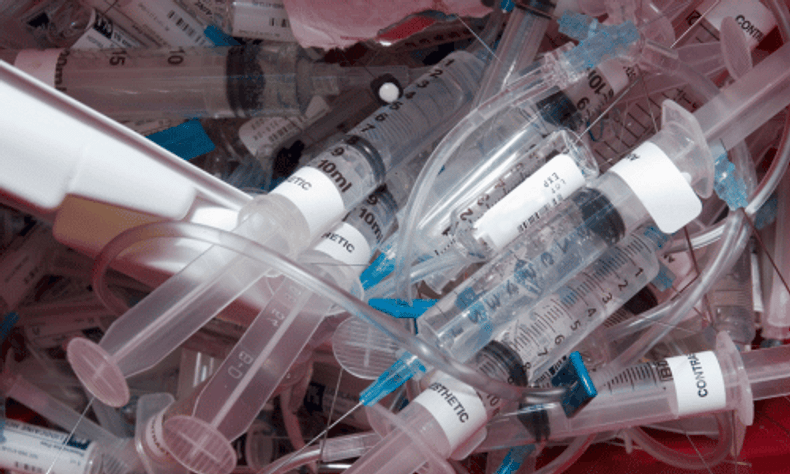
A good home syringe storage system does four things: it keeps your supplies sterile and undamaged, it keeps them organized so you never run short, it keeps them private and discreet, and it keeps them safely out of the reach of children and visitors. A single well-chosen container and a consistent routine cover all four.
For anyone who injects regularly, storage is not an afterthought — it is part of safe, reliable treatment. Poorly stored syringes can be contaminated, damaged, or exposed to temperatures that ruin the medication beside them. Disorganized supplies lead to missed doses. And unsecured needles pose a genuine risk to children and anyone else in the home.
This guide walks through how to build a storage system that handles all of it, whether you want maximum discretion, maximum organization, or simply a safer setup than a drawer full of loose supplies.
Key Takeaways
- Keep supplies sterile: store syringes in their original sealed packaging, in a clean, dry place away from heat and sunlight.
- Store medication correctly: follow the label's temperature guidance, and keep it away from heat and freezing.
- Keep everything out of children's reach: use a high, locked, or otherwise secured location.
- Stay organized: one dedicated container, a simple inventory habit, and reorder before you run low.
- Plan for privacy: a discreet, unlabeled container in a low-traffic spot keeps your treatment your business.
- Always include a sharps container for used needles — never dispose of them in household trash.
Why a Storage System Matters
Storing syringes properly protects three things at once: the sterility of your equipment, the effectiveness of your medication, and the safety of everyone in your home.
Sterile syringes stay sterile only while their packaging is intact and they are kept clean and dry. A syringe rattling loose in a drawer, exposed to dust, moisture, or a cracked barrel, can no longer be trusted. Medication stored beside a heat source or in a spot that freezes can degrade invisibly. And loose needles within a child's reach are a preventable hazard.
A deliberate system removes all of these risks at once, and has a quieter benefit too: it makes your routine calmer. When everything has a place and you always know how much you have left, injecting becomes one less thing to worry about.
Keeping Supplies Sterile and Undamaged
Store syringes in their original sealed packaging until the moment you use them, in a clean, dry place away from direct heat and sunlight. The packaging is what maintains sterility, so keeping it intact is the single most important storage rule.
- Leave packaging sealed. Do not open or unwrap syringes until you are ready to use them. Each one is sterile only until its wrapper is broken.
- Keep it dry. Moisture can compromise packaging and promote contamination. Avoid bathrooms and areas near sinks.
- Keep it cool and shaded. Heat and sunlight can degrade both packaging and any medication stored alongside it. Avoid windowsills, radiators, and appliances that give off heat.
- Inspect before use. Check that packaging is intact and the syringe barrel is free of cracks or debris. Discard anything damaged.
- Respect expiration dates. Sterile packaging is only guaranteed until the printed date. Rotate stock so older supplies are used first.
Storing the Medication Itself
Medication has its own storage rules, and they usually differ from those for the syringes. Follow the temperature guidance on your medication's label — many injectables are refrigerated when unopened and kept at room temperature once in use, but this varies by product.
The two enemies of most injectable medication are heat and freezing. Insulin and many biologics degrade when exposed to extreme temperatures, and frozen insulin should never be used. If you store medication in the refrigerator, keep it away from the back wall and freezer compartment, where it can freeze accidentally. For the full picture on temperature, see our guide on whether heat can impact your injections.
If your medication and syringes need different conditions — refrigerated medication, room-temperature syringes — your storage system can simply have two homes: a dedicated spot in the fridge for medication, and a separate container elsewhere for syringes and accessories. A small note or checklist bridging the two keeps everything coordinated.
Keeping Syringes Safe From Children and Others
Store all syringes, needles, and medication out of the reach of children — ideally in a high, locked, or otherwise secured location that curious hands cannot access. This applies to unused supplies, medication, and especially to used sharps.
- Choose a high or locked location. A top shelf, a lockable box, or a secured cabinet. A simple lidded container on a low shelf is not enough if young children are in the home.
- Keep used sharps especially secure. A used needle is both a puncture and an infection risk. The sharps container should be as inaccessible as your unused supplies.
- Never leave supplies out after injecting. The most dangerous moment is when everything is laid out on a counter. Put it away immediately.
- Brief other household members. Anyone sharing the space should know where supplies are, that they are off-limits, and what to do if they find a stray needle.
- Consider guests and pets too. Visiting children and pets can reach places you might not expect. Secured storage protects everyone.
Staying Organized So You Never Run Short
The organizational goal is simple: everything in one place, and always knowing how much you have left. A dedicated container plus a reorder habit prevents the two big failures — scrambling to find supplies, and running out unexpectedly.
Build one dedicated kit
Keep everything for an injection in a single container: syringes, needles (draw and inject, if you use both), alcohol swabs, gauze, a sharps container, and any accessories. When it is all together, preparing for an injection takes seconds and nothing gets forgotten. A tackle box, a lidded storage bin, or a purpose-made medical organizer all work — choose one with compartments if you use multiple supply types.
Track your inventory
- Know your usage rate. Work out how many syringes you use per week so you can predict when you will run low.
- Set a reorder trigger. Decide on a minimum stock level — say, two weeks' worth — that prompts you to reorder before you are down to the wire.
- Reorder in advance. Account for shipping time and possible delays. Running out is never worth the small cost of ordering early.
- Rotate stock. Use older supplies first so nothing reaches its expiration date unused.
Buying syringes and needles in bulk is the simplest way to maintain a comfortable buffer, since it reduces both the per-unit cost and the number of times you need to reorder.
Keeping Your Storage Private and Discreet
Privacy is a legitimate part of a storage system. Your treatment is your own business, and a discreet setup — an unlabeled container in a low-traffic spot — keeps it that way without compromising safety or organization.
Discretion and security actually reinforce each other. A plain, opaque container in a secured location is both private and safe: it does not advertise its contents, and it keeps them out of reach. You do not need anything conspicuous or medical-looking — a neutral storage box on a high shelf draws no attention while doing everything a storage system should.
- Choose a neutral, opaque container that blends in rather than announcing what it holds.
- Pick a low-traffic location away from shared or high-visibility areas of the home.
- Keep the sharps container discreet too so used-needle disposal is as private as the rest of your routine.
- Balance privacy with household safety. Trusted household members should still know supplies exist and are off-limits, even if the exact contents stay private.
Building Sharps Disposal Into Your System
A complete storage system always includes a plan for used needles. Every used syringe goes into a hard-sided, puncture-resistant sharps container — never into household trash, and never recapped by hand.
Keep the sharps container as part of your injection kit, so disposing of a used needle is the immediate, automatic last step of every injection. If you cannot obtain an FDA-cleared sharps container, a sturdy hard-plastic container with a tight, secure lid is an acceptable interim option — avoid glass, thin plastic, or anything that can be punctured.
- Never recap or hand-manipulate used needles. Drop them straight into the container.
- Do not overfill. Seal the container when it is about three quarters full and start a new one.
- Store the full container securely until you can dispose of it, with the same care as unused supplies.
- Know your local disposal options. Many pharmacies, hospitals, and household hazardous waste sites accept sharps. Rules vary by area, so check what is available near you.
Frequently Asked Questions
How should I store syringes at home?
Keep syringes in their original sealed packaging until you use them, in a clean, dry place away from direct heat and sunlight. Store them in one dedicated container along with your other injection supplies, keep them out of the reach of children, and respect the expiration date printed on the packaging.
Do syringes need to be refrigerated?
No. Unused sterile syringes do not need refrigeration — they simply need to be kept clean, dry, and out of extreme heat and sunlight in their sealed packaging. It is the medication that often needs refrigeration, so store the two according to their separate requirements.
How do I store syringes safely around children?
Keep all syringes, needles, medication, and used sharps in a high, locked, or otherwise secured location that children cannot reach. Never leave supplies out on a counter after injecting, put everything away immediately, and make sure other household members know the supplies are off-limits.
How can I store syringes discreetly?
Use a neutral, opaque container that does not advertise its contents, and keep it in a low-traffic spot away from shared areas. A plain storage box on a high shelf is both private and safe. Just make sure trusted household members still know it exists and is off-limits, for safety.
How do I keep track of my syringe supply?
Work out how many syringes you use per week, set a minimum stock level that triggers a reorder (such as two weeks' worth), and reorder in advance to account for shipping. Rotate your stock so older supplies are used first. Buying in bulk makes maintaining a buffer easier.
Where do I put used needles at home?
In a hard-sided, puncture-resistant sharps container, never in household trash and never recapped by hand. Keep the container as part of your injection kit, seal it when it is about three quarters full, and dispose of it at a pharmacy, hospital, or hazardous waste site that accepts sharps.
Can I store medication and syringes together?
You can keep them coordinated as one system, but they may need different conditions — many medications are refrigerated while syringes are stored at room temperature. In that case, use a dedicated fridge spot for medication and a separate container for syringes, and keep a simple routine that bridges the two.
The Bottom Line
A private syringe storage system is not complicated: one dedicated, discreet container kept clean, dry, and shaded; medication stored to its label; everything secured out of children's reach; a simple inventory habit so you never run short; and a sharps container built into the routine. Set it up once and it protects your supplies, your medication, your privacy, and everyone in your home — with almost no ongoing effort.
For related reading, see our guides on whether heat can impact your injections and traveling with syringes. Or stock your storage system with sterile syringes and needles in bulk — shipped same day on orders placed before 10 AM EST, Monday through Friday.
Medical disclaimer: This article is for general educational purposes only and is not a substitute for advice from a licensed healthcare provider or pharmacist. Always follow the instructions supplied with your medication and consult your provider about your specific situation.
Sources
U.S. Food and Drug Administration — Information Regarding Insulin Storage and Switching Between Products in an Emergency — https://www.fda.gov/drugs/emergency-preparedness-drugs/information-regarding-insulin-storage-and-switching-between-products-emergency
Centers for Disease Control and Prevention — Injection Safety: Safe Injection Practices and Your Health — https://www.cdc.gov/injection-safety/about/index.html
U.S. Food and Drug Administration — Safely Using Sharps (Needles and Syringes) at Home, at Work and on Travel — https://www.fda.gov/medical-devices/safely-using-sharps-needles-and-syringes-home-work-and-travel/best-way-get-rid-used-needles-and-other-sharps