
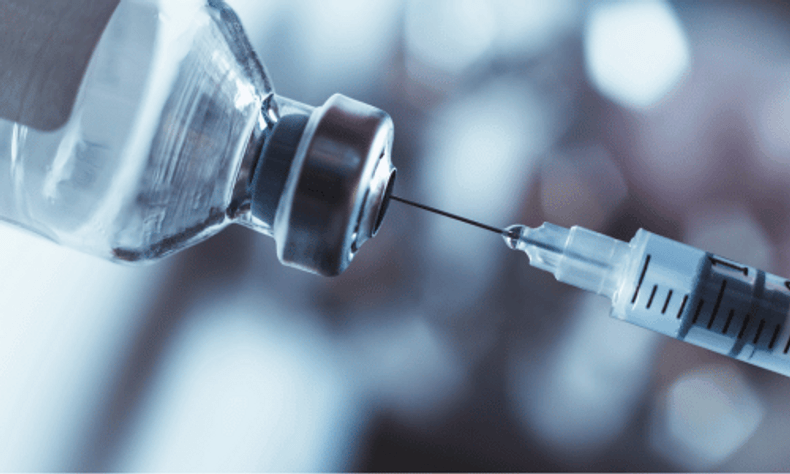
A needle bevel is the angled, sloped surface ground into the tip of a hypodermic needle to create a sharp cutting edge. Its angle and geometry directly determine how much force is needed to penetrate the skin — and lower penetration force means less pain. A shallower bevel angle produces a longer, more streamlined tip that slices into tissue gradually. A steeper angle produces a blunter tip that requires more force to push through.
That relationship is not a marketing claim; it is measurable in a laboratory. Research testing hypodermic needles against artificial tissue found that, holding needle diameter constant, a greater bevel angle required greater force to puncture the skin, and that this greater penetration effort is what patients perceive as pain, according to a study published in the Journal of Healthcare Engineering.
This guide explains what a bevel actually is, how bevel angle and multi-bevel tip designs affect comfort, why bevel orientation matters during injection, and how to choose and handle needles so injections hurt as little as possible.
Key Takeaways
- The bevel is the angled cutting surface at the needle tip. It is what makes the needle pierce rather than push.
- Shallower bevel angle = lower penetration force = less pain. Steeper bevel angles require measurably more force to enter skin.
- Larger diameter also increases penetration force, so gauge and bevel work together to determine comfort.
- Multi-bevel tips (5-bevel vs 3-bevel) reduce insertion force further by breaking the entry into a more gradual cutting sequence.
- Bevel-up orientation is standard for most injections — it lets the sharpest point enter first.
- Reused needles develop burrs and deformation, which destroys the bevel geometry and dramatically increases pain and tissue trauma.
- A fresh, sharp, correctly oriented needle is the cheapest pain-reduction tool available.
What Is a Needle Bevel?
A needle bevel is the angled surface ground onto the shaft of a sharpened tube to form a slanting edge at the needle point, which allows the needle to pass through skin with minimal trauma. Without a bevel, a needle would be a blunt open cylinder — it would have to crush and tear its way through tissue rather than slicing cleanly.
Look closely at a hypodermic needle and you will see the tip is not cut straight across. It is cut on a slant, producing an elongated point with a sharp leading edge and an oval opening (the lumen) facing one direction. That slanted face is the bevel, and the sharp leading tip is where all the cutting happens.
The parts of a bevel
- Primary bevel angle. The angle of the main slanted cut. A lower angle produces a longer, sharper, more streamlined point.
- Point length. How far the tip extends. A shallower angle means a longer point.
- The back edge of the bevel, where the slanted cut meets the full diameter of the shaft.
- The open channel through which the medication flows, exposed as an oval opening on the bevel face.
- Secondary bevels. Additional facets ground onto the tip in multi-bevel designs to further reduce cutting resistance.
Needle geometry is not left to chance. It is governed by international standards — ISO 7864 for sterile hypodermic needles and ISO 9626 for the stainless steel tubing itself — which is why a 25-gauge needle from one reputable manufacturer performs comparably to another.
How Bevel Angle Affects Penetration Force and Pain
The core principle is simple: the lower the penetration force required to push a needle through skin, the less pain the patient perceives. Everything about bevel design is engineering toward that goal.
In controlled testing against a skin-substitute model, researchers measured the force required for needles of varying diameters and bevel angles to puncture artificial tissue. The pattern was consistent: as bevel angle increased, so did the force required. The measured penetration force ranged from roughly 0.25 newtons at the low end — a fine needle with a shallow 15-degree bevel — up to about 2.9 newtons for a wide needle with a 90-degree tip, according to the Journal of Healthcare Engineering study. That is more than a tenfold difference in the force driven through skin, purely from geometry.
Why a shallower angle hurts less
A shallow bevel angle creates a longer, more slender point. Instead of the full diameter of the needle arriving at the skin all at once, the tissue is parted progressively as the tapered tip advances. The cutting is gradual rather than abrupt, which means less force, less tissue displacement, and less stimulation of the pain receptors packed into the upper layers of skin.
Needle manufacturers exploit this deliberately. One study of pen needles noted that reducing the primary bevel angle from a conventional 11 degrees to 7.5 degrees produces a longer, more streamlined tip that allows a more gradual insertion into skin, as described in research published in Medical Devices: Evidence and Research. A few degrees of geometry translate into a measurably gentler injection.
Diameter matters too
Bevel angle does not act alone. The same research found that a larger needle diameter also increases the force required to puncture skin. Gauge and bevel work together: a fine-gauge needle with a shallow, well-ground bevel is the most comfortable combination, while a wide needle with a steep bevel is the least.
This is the practical trade-off behind needle selection. A finer needle is more comfortable but delivers fluid more slowly and can flex or clog with thick, viscous medication. A wider needle handles viscous fluid easily but requires more force to insert. Matching the needle to the medication is the balance point.
Three-Bevel vs Five-Bevel Needle Tips
Multi-bevel needles add extra ground facets to the tip, breaking the act of penetration into a more gradual cutting sequence and reducing insertion force compared with conventional designs. Most standard hypodermic needles use a three-bevel tip: one primary bevel plus two secondary facets. Five-bevel designs add further facets to refine the point.
When tested in a clinically relevant laboratory model, 5-bevel tips significantly reduced needle insertion force compared with 3-bevel tips, and those laboratory differences carried over into what patients actually felt, according to research published in the Journal of Diabetes Science and Technology. The difference showed up not only in healthy volunteers but in patients' subjective experience during real injections.
The same principle appears in dentistry. A randomized clinical trial of 150 patients receiving local anesthesia compared three needle bevel designs and found a significantly lower reported injection pain level with a scalpel-designed bevel than with triple-bevel or regular-bevel needles, in a study published in the International Journal of Oral and Maxillofacial Surgery. Bevel geometry is one of the few variables in an injection that a manufacturer can improve without changing anything about the patient or the drug.
Bevel Up or Bevel Down? Why Orientation Matters
For most injections, the needle should be inserted bevel-up — with the slanted opening facing away from the skin — so the sharpest leading point enters first and cuts cleanly. This is the standard taught for intradermal, subcutaneous, and most intramuscular injections, as well as for venipuncture.
The reason is geometric. The bevel's sharpest point sits at the leading edge of the slanted face. Orienting it upward means that fine point is the first thing to contact the skin, so it slices rather than pushes. Insert the needle bevel-down and a blunter portion of the tip contacts the skin first, which increases the force needed and can coring or drag tissue.
Practical orientation guidance
- Intradermal injections: bevel up, at a very shallow angle of roughly 5 to 15 degrees, so the medication deposits within the dermis.
- Subcutaneous injections: bevel up, typically at 45 or 90 degrees depending on needle length and the amount of subcutaneous tissue at the site.
- Intramuscular injections: bevel up, inserted at a 90-degree angle to reach the muscle. The CDC specifies a 90-degree angle and a 22 to 25 gauge needle for intramuscular administration in its vaccine administration guidance.
- Drawing up from a vial: bevel up as it passes through the rubber stopper reduces the risk of coring, where a fragment of rubber is punched out and enters the medication.
Always follow the specific technique your healthcare provider taught you for your medication. The bevel-up default is a general rule, not a substitute for individual clinical instruction.
Why Reusing a Needle Destroys the Bevel
A needle bevel is precision-ground metal, and a single insertion is enough to deform it. Reusing a needle means injecting with a damaged, burred tip that tears tissue instead of slicing it. This is one of the most underappreciated reasons that reused needles hurt so much more than fresh ones.
The scale of the deformation is striking. In one clinical trial examining needle tips under scanning electron microscopy after a single use, deformation was detected in roughly 97 percent of all needles examined, and across the wider literature reported deformation rates range from about 43 percent to 97 percent depending on the study and the needle, per the research in the International Journal of Oral and Maxillofacial Surgery. A needle that has been through skin once is, in geometric terms, no longer the needle you started with.
Studies analyzing repeatedly used needles under microscopy have documented the loss of the ground bevel profile and the formation of burrs — small metal projections that can hamper penetration and traumatize tissue on the way in. Those burrs are why a second injection with the same needle feels sharp, ragged, and bruising in a way the first did not.
And the comfort argument is secondary to the safety one. The CDC's rule for injection safety is unambiguous: one needle, one syringe, only one time. Reusing needles or syringes can transmit bloodborne pathogens including hepatitis B, hepatitis C, and HIV, per the CDC's injection safety guidance. A dulled bevel is a bad reason to reuse a needle. Disease transmission is an unacceptable one.
How to Get the Most Comfortable Injection From Your Needle
Bevel geometry does most of the work, but technique determines whether you actually benefit from it. These steps preserve the bevel's advantage:
- Use a new needle every single time. A fresh bevel is sharp, burr-free, and correctly ground. A reused one is none of those things.
- Switch needles after drawing up. Passing through a vial's rubber stopper dulls the tip and can create micro-burrs. Draw with one needle, inject with a fresh one.
- Orient the bevel up. The sharpest point should meet the skin first.
- Insert quickly, inject slowly. A fast, decisive insertion minimizes the time the bevel spends stretching skin. A slow push minimizes tissue pressure once you are in.
- Choose the finest gauge your medication allows. Higher gauge number means finer needle, which means lower penetration force — as long as the medication is thin enough to flow through it.
- Never straighten and reuse a bent needle. The bevel is already destroyed and the shaft is weakened.
- Let the needle touch nothing but skin. Tapping the tip against a table, a cap, or a vial edge is enough to blunt it.
If your injections have gradually become more painful over time, a dulled or reused needle is the first thing to rule out. Keeping sterile single-use needles and syringes in stock removes the temptation to stretch a needle one more injection than it should go.
Frequently Asked Questions
What is a needle bevel?
A needle bevel is the angled surface ground into the tip of a hypodermic needle to form a sharp, slanting cutting edge. It allows the needle to slice through skin rather than push through it, which reduces both force and trauma.
Does bevel angle affect injection pain?
Yes. Laboratory testing shows that, at a fixed needle diameter, a greater bevel angle requires greater force to puncture the skin, and greater penetration force is what patients perceive as pain. Shallower bevel angles produce longer, sharper tips that enter more gradually and hurt less.
Should the bevel face up or down when injecting?
Bevel up is the standard for most injections, including intradermal, subcutaneous, and intramuscular. Facing the bevel up means the sharpest leading point contacts the skin first, so the needle cuts cleanly instead of pushing bluntly. Always follow the technique your provider taught you for your specific medication.
What is the difference between a 3-bevel and a 5-bevel needle?
A 3-bevel needle has one primary bevel plus two secondary facets; a 5-bevel needle adds further facets to refine the tip. In laboratory testing, 5-bevel tips significantly reduced needle insertion force compared with 3-bevel tips, and patients reported a difference in real injections.
Does a higher gauge needle hurt less?
Generally yes. A higher gauge number means a finer needle, and a smaller diameter requires less force to penetrate skin. The trade-off is that finer needles deliver fluid more slowly and can clog or flex with thick, viscous medications.
Why does a reused needle hurt more?
Because a single insertion deforms the bevel. Studies examining needle tips under microscopy have found deformation in the large majority of needles after just one use, along with burr formation that tears tissue instead of slicing it. Beyond the pain, reusing needles risks transmitting bloodborne infections and should never be done.
What is needle coring and how does the bevel prevent it?
Coring happens when a needle punches out a fragment of the rubber vial stopper, which can then enter the medication. Inserting the needle bevel-up at a slight angle when piercing the stopper reduces the risk by letting the sharp point slice rather than punch.
The Bottom Line
The bevel is the most consequential few millimeters of a needle. Its angle determines the force required to enter skin, and that force is what the patient feels. Shallower angles, finer gauges, and refined multi-bevel geometries all reduce penetration force, which is why modern needles are dramatically more comfortable than those of a generation ago.
But none of that engineering survives a second use. A single insertion is enough to blunt and burr the tip, and reusing needles carries an infection risk that no amount of comfort could justify. Use a fresh needle, orient the bevel up, insert quickly, and inject slowly — and let the geometry do the work it was designed to do.
For more, read our guides on minimizing pain and discomfort when using syringes at home and 27-gauge needles: precision and versatility in medicine. Or browse our full range of sterile needles and syringes to find the right gauge for your application.
Medical disclaimer: This article is for general educational purposes only and is not a substitute for advice from a licensed healthcare provider or pharmacist. Always follow the instructions supplied with your medication and consult your provider about your specific situation.
Sources
Gonçalves et al. — Variation of the Penetration Effort in an Artificial Tissue by Hypodermic Needles, Journal of Healthcare Engineering (2020) — https://www.hindawi.com/journals/jhe/2020/8822686/
Hirsch et al. — Impact of a Modified Needle Tip Geometry on Penetration Force as well as Acceptability, Preference, and Perceived Pain in Subjects with Diabetes, Journal of Diabetes Science and Technology — https://pmc.ncbi.nlm.nih.gov/articles/PMC3380774/
Leonardi et al. — Penetration Force and Cannula Sliding Profiles of Different Pen Needles: The PICASSO Study, Medical Devices: Evidence and Research — https://www.dovepress.com/penetration-force-and-cannula-sliding-profiles-of-different-pen-needle-peer-reviewed-fulltext-article-MDER
Influence of Needle Bevel Design on Injection Pain and Needle Deformation in Dental Local Infiltration Anaesthesia — Randomized Clinical Trial, International Journal of Oral and Maxillofacial Surgery — https://www.sciencedirect.com/science/article/abs/pii/S0901502717315217
Centers for Disease Control and Prevention — Vaccine Administration (Intramuscular Injection Technique) — https://www.cdc.gov/vaccines/hcp/imz-best-practices/vaccine-administration.html
Centers for Disease Control and Prevention — Injection Safety: Safe Injection Practices and Your Health — https://www.cdc.gov/injection-safety/about/index.html