
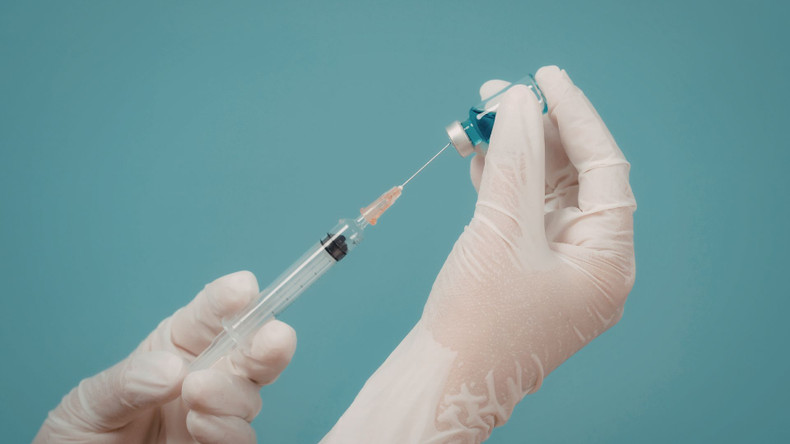
The right syringe size is the smallest one that holds the full dose.
A 1ml syringe is marked in 0.01ml steps and is used for insulin, intradermal tests and small subcutaneous doses; a 3ml syringe is marked in 0.1ml steps and covers most routine IM and subcutaneous injections; 5ml and 10ml syringes are marked in 0.2ml and 0.5ml steps and are used for IV medication, flushes, aspiration and reconstitution.
This guide compares the four sizes clinics, pharmacies and labs order most often — what each one measures, where it’s used, and how to decide stocking ratios when you’re buying by the case rather than the box.
Key takeaways
- Syringe size refers to barrel capacity in millilitres (ml), not needle size — gauge and length are specified separately.
- Finer graduations sit on smaller barrels, so a small dose drawn into a large syringe is measured less precisely.
- A 3ml syringe is the general-purpose workhorse for IM and subcutaneous injection; 1ml handles precision dosing; 5ml and 10ml handle volume work.
- Draw volume should ideally sit between roughly half and full capacity of the barrel you choose.
- Injection site limits volume independently of syringe capacity — CDC’s suggested range for the deltoid is 0.5–2ml.
- For bulk procurement, most general clinics find 3ml and 5ml make up the bulk of usage, with 1ml and 10ml ordered in smaller supporting volumes.
What “syringe size” actually means
Syringe size is the barrel’s nominal capacity — the maximum volume it is calibrated to hold, expressed in millilitres. It describes the barrel only. The needle attached to it is described separately by gauge (diameter) and length, and the tip is described by its connection type, usually Luer lock or Luer slip.
Three things change as capacity increases:
- Graduation interval — the volume represented by each printed line on the barrel.
- Barrel diameter — wider barrels mean the same volume occupies less vertical length, which is what reduces reading precision.
- Dead space — the small residual volume held in the tip and needle hub after the plunger is fully depressed.
ISO 7886-1:2017, the international standard for sterile single-use hypodermic syringes, sets requirements for graduated scale, tolerance on graduated capacity and maximum dead space across nominal capacities (ISO). Any syringe you buy for clinical use should state compliance with it.
Syringe size comparison table
| 1ml | 3ml | 5ml | 10ml | |
|---|---|---|---|---|
| Graduation interval | 0.01ml | 0.1ml | 0.2ml | 0.5ml |
| Practical dose range | 0.05–1ml | 0.3–3ml | 1–5ml | 3–10ml |
| Typical routes | Intradermal, subcutaneous | IM, subcutaneous | IV, IM, flush | IV, flush, aspiration, irrigation |
| Common clinical uses | Insulin, TB skin tests, allergy and fertility dosing, paediatric doses | Vaccines, antibiotics, routine injections, blood draw into tube | IV push, saline flush, reconstitution of lyophilised drugs | Line flushing, aspiration, wound irrigation, large-volume transfer |
| Usual gauge pairing | 25G–30G | 21G–25G | 20G–23G | 18G–21G |
Graduation increments reflect standard commercially marked barrels; dose ranges reflect the half-to-full capacity guidance below.
1ml syringes
A 1ml syringe is used wherever the dose is under a millilitre and the exact figure matters. Marked in 0.01ml steps, it is the only one of the four that can reliably distinguish a 0.07ml dose from a 0.08ml dose.
Common applications:
- Insulin (on insulin-specific barrels marked in units rather than ml)
- Intradermal tests, including tuberculin skin testing
- Allergy immunotherapy and fertility injections
- Paediatric and neonatal dosing
- Anticoagulant dosing where a small error carries clinical weight
A note on insulin: insulin syringes are a separate product category governed by their own standard (ISO 8537) and marked in units on a U-100 scale. A general-purpose 1ml syringe marked in millilitres should not be substituted for one without a deliberate conversion.
Order bulk 1ml syringes in smaller case volumes than your 3ml stock unless you run a diabetes, fertility or allergy service.
3ml syringes
The 3ml syringe is the most widely used size in general clinical practice. Its 0.1ml graduations and moderate barrel diameter suit the dose range most injections fall into — roughly 0.5ml to 2ml.
Common applications:
- Intramuscular injections, including most vaccines
- Subcutaneous injections above 1ml
- Antibiotic and analgesic administration
- Drawing samples into collection tubes
- Veterinary small-animal dosing
If one size dominates a clinic’s consumption, it is usually this one. For most general practices, pharmacies and urgent care sites, 3ml is the line to protect against stockouts first.
See the full range of 3ml syringes by the case.
5ml syringes
A 5ml syringe covers volumes too large for a 3ml barrel but still small enough to need reasonable precision. Graduated in 0.2ml steps, it is the standard choice for IV work and drug preparation.
Common applications:
- IV push medication
- Saline flushes on peripheral lines
- Reconstituting powdered or lyophilised drugs
- Aspirating fluid during minor procedures
- Oral liquid dosing when fitted with an oral tip
Luer lock tips matter more here than at 1ml. Once a syringe is connecting to IV tubing or a needleless connector rather than a bare needle, a threaded lock holds under the pressure of a push. Our guide to [Luer lock vs Luer slip tips](INTERNAL-LINK: /blog/luer-lock-vs-luer-slip) covers when each is appropriate.
10ml syringes
A 10ml syringe is a volume tool. Its 0.5ml graduations make it unsuitable for precise small doses, but it moves fluid efficiently and its markings are easy to read at a glance.
Common applications:
- Flushing central and peripheral lines
- Aspirating fluid or blood
- Wound irrigation
- Transferring diluent between vials
- Post-operative drug administration
One important constraint: catheter manufacturers often specify a minimum syringe size for flushing, because smaller barrels generate higher pressure at the same plunger force. Check the device instructions for use rather than assuming a 10ml flush syringe is interchangeable with a 5ml one.
Browse 5ml and 10ml syringes in bulk packs.
How to choose the right syringe size
Work through it in this order:
- Start from the dose volume. Not from what’s nearest to hand in the drawer.
- Pick the smallest barrel that holds the dose comfortably. Aim to fill the barrel to between about half and full capacity. A 0.4ml dose in a 10ml barrel sits across less than one printed line.
- Check the site limit, not just the barrel. Injection site anatomy caps volume independently. CDC’s suggested volumes for intramuscular injection give the deltoid an average of 0.5ml and a range of 0.5–2ml, with the vastus lateralis accommodating 1–4ml (Immunize.org, Ask the Experts). Doses above the site limit are split across sites, not pushed into one.
- Match gauge and length to the route. A correctly sized barrel on the wrong needle still delivers the dose to the wrong tissue depth. See our needle gauge and length guide.
- Confirm tip type against what it connects to. Bare needle, IV tubing, needleless connector or enteral port each have different requirements.
Stocking syringe sizes for a clinic or facility
Buying by the case changes the question from “which syringe for this dose” to “what mix should sit on the shelf.” A few things worth building into the order:
- Weight the mix toward your highest-volume route. A vaccination-heavy practice consumes 3ml faster than anything else. A dialysis or infusion service consumes 10ml flush syringes faster. Pull three months of usage before setting ratios rather than ordering equal quantities across sizes.
- Keep sizes distinct on the shelf. Separating 3ml and 5ml stock physically reduces the chance of the wrong barrel being grabbed mid-procedure.
- Buy single-use volumes honestly. CDC’s position is unambiguous: a syringe and needle are single-patient, single-use devices, summarised in the One & Only Campaign rule of one needle, one syringe, only one time (CDC, Preventing Unsafe Injection Practices). Stock levels should support that, not quietly pressure staff against it.
- Right-size vials alongside syringes. CDC also advises purchasing the smallest vial necessary, specifically to reduce the temptation to reuse single-dose vial contents across patients.
- Factor in dead space on high-cost drugs. The residual volume left in the tip and hub is capped by ISO 7886-1, but across thousands of doses of an expensive biologic it is a real line item. Low-dead-space options are worth pricing where drug cost dominates.
For context on why single-use discipline carries weight globally: WHO estimates at least 16 billion injections are administered worldwide each year, around 90% of them in curative care (WHO guideline on safety-engineered syringes).
Mistakes that cost accuracy or money
- Using an oversized barrel for a small dose. The most common precision error, and the easiest to prevent.
- Reading a 5ml barrel as if it were a 3ml barrel. The lines mean 0.2ml, not 0.1ml. Size-specific familiarity matters.
- Treating insulin syringes and 1ml general-purpose syringes as interchangeable. Units and millilitres are different scales.
- Ignoring catheter flush minimums. A smaller syringe is not a safer syringe when pressure is the concern.
- Ordering one size in bulk and the rest ad hoc. Emergency top-up orders on 1ml or 10ml usually cost more per unit than planning them into the same case order.
Frequently asked questions
What is the most commonly used syringe size?
The 3ml syringe is the most commonly used size in general healthcare settings. Its 0.1ml graduations and moderate barrel width suit the majority of intramuscular and subcutaneous injections, which typically fall between 0.5ml and 2ml.
What is the difference between a 1ml and a 3ml syringe?
A 1ml syringe is graduated in 0.01ml increments and is used for doses under a millilitre where precision matters, such as insulin, intradermal tests and paediatric dosing. A 3ml syringe is graduated in 0.1ml increments and is used for standard injection volumes from roughly 0.3ml to 3ml.
Can I use a 10ml syringe for a 1ml dose?
It is possible but not advisable. A 10ml syringe is marked in 0.5ml increments, so a 1ml dose spans only two printed lines and small errors are hard to see. Use the smallest barrel that holds the dose.
How many ml can be injected into the deltoid?
CDC’s suggested volume for intramuscular injection into the deltoid is an average of 0.5ml, with a range of 0.5–2ml. The vastus lateralis accommodates larger volumes, suggested at 1–4ml. Larger total doses are split across separate sites.
Is a 5cc syringe the same as a 5ml syringe?
Yes. One cubic centimetre (cc) equals one millilitre (ml), so 5cc and 5ml describe the same capacity. Both markings appear on packaging, with ml now the preferred clinical unit.
Which syringe sizes should a clinic keep in stock?
Most general clinics stock 3ml and 5ml as their primary sizes, with 1ml for precision dosing and 10ml for flushes and aspiration. Exact ratios should be set from your own usage data rather than ordered in equal quantities.
Do syringe sizes include the needle?
No. Syringe size refers to barrel capacity only. Needles are specified separately by gauge and length, and syringes are sold both with an attached needle and as needle-free barrels.
Choosing sizes with confidence
Syringe sizes exist to match dose volumes, and the logic behind choosing between them is consistent: identify the dose, choose the smallest barrel that holds it well, then confirm the site, needle and tip. The 3ml barrel will carry most of the load in a general setting, with 1ml, 5ml and 10ml filling the precision and volume ends of the range.
If you’re setting up or reviewing a bulk order across sizes, our team can help work out a mix from your usage pattern — we’ve supplied over 500 healthcare partners across clinics, pharmacies, labs and care facilities for around 15 years. Browse syringes by size .
Last updated: November 2026. This article is general product guidance for healthcare procurement and is not clinical advice. Follow your facility’s protocols and the manufacturer’s instructions for use.
Sources
- ISO 7886-1:2017, Sterile hypodermic syringes for single use — Part 1: Syringes for manual use — https://www.iso.org/standard/64790.html
- Immunize.org, Ask the Experts: Administering Vaccines (CDC suggested IM injection volumes) — https://www.immunize.org/ask-experts/immune-globulin-deltoid-muscle-dose
- CDC, Preventing Unsafe Injection Practices — https://www.cdc.gov/injection-safety/hcp/clinical-safety
- WHO, Guideline on the use of safety-engineered syringes for intramuscular, intradermal and subcutaneous injections in health care settings — https://www.who.int/publications/i/item/9789241549820