
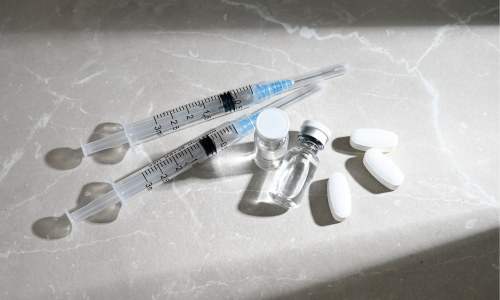
In many households, medical supplies share storage space with other items or with supplies belonging to multiple people. When syringes and medications are stored together in drawers, cabinets, or containers, the risk of mix-ups or cross-contamination can increase if everything is not clearly organized.
Taking a few simple steps to separate, label, and store supplies properly can help protect sterility and ensure that everyone in the household uses the correct items safely.
Keep Medical Supplies Clearly Separated
One of the easiest ways to prevent contamination is to give injection supplies their own dedicated storage space.
Helpful approaches include:
- Using a separate drawer, container, or shelf specifically for injection supplies
- Keeping syringes and medications away from general household items
- Avoiding storage areas where food, cleaning supplies, or toiletries are kept
Designating a clear storage area helps reduce accidental contact with items that could compromise sterility.
Label Supplies for Each Person
In households where more than one person uses injectable medications, labeling is especially important.
Consider:
- Using labeled containers or bins for each individual
- Marking medications with names and opening dates
- Storing each person’s syringes and supplies in separate sections
Clear labeling helps prevent confusion and ensures the right supplies are used by the right person.
Keep Packaging Intact Until Use
Syringes should remain in their original packaging until they are ready to be used. Opening packages too early can expose sterile equipment to dust, moisture, or other contaminants.
To maintain sterility:
- Only open syringes immediately before preparing an injection
- Avoid handling needles or tips unnecessarily
- Discard any syringe that has been opened but not used
Maintaining packaging integrity is one of the most effective ways to protect sterile supplies.
Store Supplies in a Clean, Stable Environment
Shared spaces can sometimes introduce environmental risks, such as humidity or clutter.
To reduce these risks:
- Store syringes in cool, dry areas away from direct sunlight
- Avoid crowded drawers where items shift or press against packaging
- Regularly check storage areas for dust, spills, or damaged supplies
A clean and organized environment helps protect supplies and reduces the likelihood of contamination.
Consistent Habits Support Safe Storage
Preventing cross-contamination often comes down to simple daily habits. Washing hands before handling supplies, returning items to their designated storage space, and checking packaging before use all contribute to a safer routine.
When injection supplies are well organized and clearly separated, it becomes much easier for everyone in the household to maintain safe handling practices. Keeping reliable, sterile syringes readily available also supports these routines, and having dependable supplies on hand from BulkSyringes.com can help ensure your storage system stays safe, organized, and ready whenever injections are needed.