
A 30-gauge needle goes into a rigid, puncture-resistant sharps container immediately after use, without being recapped, and the container is disposed of according to local community rules once it is about three-quarters full. That two-step process is the FDA’s standard recommendation, and it applies the same way to a 30G insulin needle at a kitchen table as it does to a tray of them in a dermatology clinic.
The thinness of a 30-gauge needle creates a false sense of safety. It is one of the finer gauges in routine use — roughly 0.31mm in outer diameter — and because it causes so little sensation going in, it is easy to treat casually on the way out. It still carries whatever was in the patient’s bloodstream, it still punctures a glove and a trash bag without resistance, and it is still regulated medical waste in most jurisdictions.
Key takeaways
- Never recap a used needle. Recapping is one of the most common causes of needlestick injury.
- Place used 30G needles directly into a sharps container at the point of use.
- Replace the sharps container at roughly three-quarters full and never reuse one.
- Household alternatives must be heavy-duty plastic with a tight, puncture-resistant lid — never glass, thin plastic bottles, or anything bound for recycling.
- Disposal rules for full containers are set at state and local level, so the final step varies by where you live.
What a 30-Gauge Needle Is and Where It’s Used
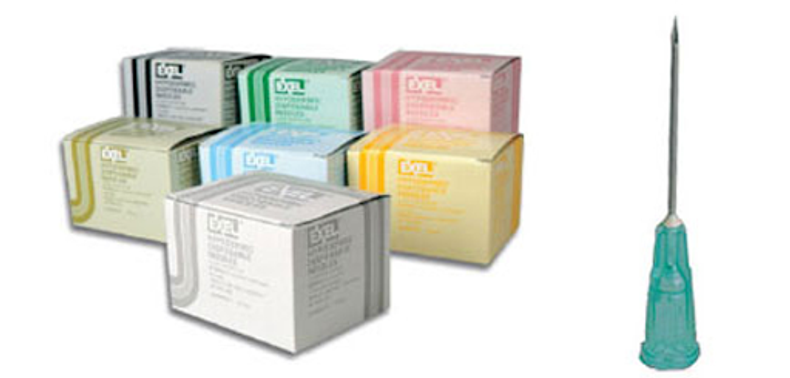
A 30-gauge needle is a fine hypodermic needle with an outer diameter of approximately 0.31mm, used where the injected volume is small and the medication is thin enough to pass through a narrow lumen. Needle gauge runs inversely to size — the higher the gauge number, the thinner the needle — so a 30G is substantially finer than a 25G and far finer than an 18G drawing needle.
Common applications include:
- Insulin injections, where ultra-fine needles in the 28G–31G range are standard
- Intradermal procedures, including skin testing and some aesthetic injectables
- Dental anaesthesia, where 30G short needles are routine for infiltration
- Small-volume subcutaneous dosing of low-viscosity medications
- Veterinary use with small animals
The clinical appeal is comfort. A narrower needle displaces less tissue and generally produces less injection pain. The trade-off is flow rate: viscous medications move slowly or not at all through a 30G lumen, which is why thicker preparations use lower gauges.
Browse 30-gauge needles and the full range of needle tips at Bulk Syringes.
Why Disposal of Fine Needles Gets Handled Carelessly
Fine needles are under-respected precisely because they don’t feel dangerous. Three patterns show up repeatedly:
- Recapping, because a capped 30G needle feels tidy and safe to set down. It isn’t — the act of guiding a thin needle back into a small cap one-handed is exactly how people stick themselves.
- Temporary parking, where a used needle is laid on a tray, a counter, or a bedside table “for a second” and is then picked up by someone who didn’t see it go down.
- General waste disposal, where a fine needle is assumed to be harmless enough for a regular bin. It will pass through a trash bag and a glove without the handler feeling it until it’s too late.
The injury statistics in professional settings are a useful reality check, because these are people who handle sharps daily. The CDC estimates that approximately 385,000 needlesticks and other sharps-related injuries occur among hospital-based healthcare personnel each year — around 1,000 per day, according to NIOSH’s sharps injury prevention materials. Earlier CDC survey data reported by the U.S. Government Accountability Office put the figure at roughly 384,000 percutaneous injuries annually in hospitals, with about 61% involving hollow-bore needles — the category a 30G hypodermic falls into.
Sharps injuries are primarily associated with occupational transmission of hepatitis B, hepatitis C, and HIV, and have been implicated in the transmission of more than 20 other pathogens. Under-reporting is substantial: surveys of healthcare personnel indicate that half or more do not report their occupational percutaneous injuries, which means published figures understate the real number.
Safe Handling of 30-Gauge Needles Before Disposal
Disposal starts before the injection. Preparing a workspace with the sharps container already open and within arm’s reach removes the gap in which most accidents happen.
Step 1 — Prepare the workspace
Place the sharps container on the same surface you’ll be working on, within easy reach of the hand that will hold the needle. Confirm it is below the fill line. Wash your hands with soap and water for at least 20 seconds and dry them completely, or use alcohol-based hand sanitizer where a sink isn’t available. If you are preparing an injection for someone else, wear gloves.
Step 2 — Inspect the needle and medication
Check that the sterile packaging is intact and undamaged, the expiration date has not passed, and the needle itself is straight with no visible burr or bend. Inspect the medication for discoloration, cloudiness where it should be clear, or particulates. Discard anything that fails inspection — into the sharps container, not the bin.
Step 3 — Prepare the injection site
Clean the site with a fresh alcohol prep pad using a single outward motion from the centre, and let it air dry completely. Injecting through wet alcohol causes stinging and can carry surface contaminants into the puncture.
Step 4 — Draw and administer
Maintain sterile technique throughout. Draw the prescribed dose, expel air bubbles by tapping the barrel and advancing the plunger, and confirm the volume against the graduation marks before injecting. Insert at the angle appropriate to the route and medication — 90° is typical for subcutaneous insulin with a short fine needle, while other routes and needle lengths call for different angles. Deliver at a steady rate and withdraw along the same line of entry.
Step 5 — Dispose immediately, without recapping
Move the needle directly from the patient to the sharps container. Do not recap. Do not bend, break, shear, or attempt to remove the needle from the hub by hand. Do not set it down on an intermediate surface.
This is explicit in OSHA’s Bloodborne Pathogens Standard, 29 CFR 1910.1030: contaminated needles must not be bent, recapped, or removed unless no alternative is feasible or the procedure specifically requires it, and where recapping is unavoidable it must be done with a one-handed scoop technique or a mechanical device.
The FDA’s Two-Step Disposal Process
The FDA recommends a two-step process for disposing of used needles and other sharps, as set out in its consumer guidance on safely using sharps.
Step 1 — Place all needles and sharps in a sharps disposal container immediately after use. This reduces the risk of sticks, cuts, and punctures from loose sharps. Containers should be kept out of reach of children and pets.
Step 2 — Dispose of the used sharps container according to your community guidelines. These guidelines vary by state and locality, and determine whether a sealed container can go in household trash, must be dropped off, or must be mailed back.
Two conditions the FDA attaches to this:
- Replace the container at about three-quarters full. Overfilling increases the risk of an accidental needlestick when adding the next sharp — a needle protruding from a packed container will stick the hand placing the next one.
- Do not reuse sharps containers. They are designed for single-fill use and sealing.
Choosing a Sharps Container
A sharps container is a rigid, puncture-resistant, leak-resistant container with a one-way opening and a closable lid, designed to hold used needles securely until disposal. FDA-cleared containers are the recommended option and are available through pharmacies, medical suppliers, and online.
The FDA specifies that all sharps disposal containers should be:
- Made of heavy-duty plastic resistant to puncture
- Able to close with a tight-fitting, puncture-resistant lid so sharps cannot come back out
- Upright and stable during use
- Leak-resistant
- Properly labelled to warn of hazardous contents
Sizing for your setting
| Setting | Typical size | Notes |
|---|---|---|
| Travel / pocket | 0.25–1 quart | Fits a toiletry bag; for a few days of doses |
| Home use | 1–2 quarts | Daily injections; sits by the preparation area |
| Exam room | 2–5 quarts | Wall-mounted at point of use, replaced on a schedule |
| Clinic / procedure room | 5–8 gallons | Floor or cart mounted; high throughput |
| Facility collection | 8–18 gallons | Central accumulation prior to licensed pickup |
The deciding factor is proximity, not volume. A container across the room is a container that gets bypassed. Point-of-use placement is the single most effective structural change a facility can make, because a meaningful share of injuries occur after use and before disposal — the interval in which a needle is being carried somewhere.
Browse sharps containers in sizes from travel through clinic volume.
Household alternatives when an FDA-cleared container isn’t available
The FDA accepts a heavy-duty plastic household container as an alternative where a cleared container isn’t available, provided it meets the same criteria above. A laundry detergent bottle is the commonly cited example.
Not acceptable:
- Glass containers — they shatter, turning one hazard into two
- Water, soda, or milk bottles — thin plastic, needles pass straight through
- Coffee cans or containers with removable snap-on lids — the lid comes off in a trash compactor
- Anything destined for recycling — sharps must never enter a recycling stream, used or unused
- Cardboard boxes or cereal containers — no puncture resistance at all
Label a household container clearly — “SHARPS — DO NOT RECYCLE” in permanent marker or on tape — and seal the lid with heavy tape before disposal.
Two further prohibitions worth stating plainly: never flush needles down a toilet, and never attempt to remove a needle from a syringe by hand or with scissors or pliers. Needle-clipping devices exist and are the only acceptable mechanical method where separation is required.
Disposing of a Full Container: Your Options
What happens to a full container depends almost entirely on where you live. Four routes cover most of the United States.
Drop-off collection sites
Many pharmacies, hospitals, health departments, medical waste facilities, fire stations, and police stations accept full sharps containers, sometimes free of charge. Call ahead — acceptance policies, hours, and whether they require an FDA-cleared container vary from one location to the next, and pharmacies in particular are inconsistent.
Mail-back programs
Mail-back services supply an approved container together with prepaid return packaging. The full container ships to a licensed disposal facility and is incinerated or autoclaved. These programs generally charge a fee and are the most practical option for people in areas without local collection, and for travellers.
Household hazardous waste collection
Many municipalities run permanent household hazardous waste sites or periodic collection events that accept sharps. Check with your local solid waste authority, since some accept sharps only in approved containers and some not at all.
Residential trash — only where permitted
Some states permit sealed, labelled sharps containers in household trash. Many do not. Where it is allowed, requirements usually include taping the lid shut, marking the container, and placing it in the trash rather than recycling. Confirm your local rule before assuming this option exists.
For state-specific guidance, the FDA directs consumers to Safe Needle Disposal at 1-800-643-1643 or info@safeneedledisposal.org.
Requirements for Clinics and Healthcare Facilities
Facilities generating sharps waste operate under a different set of obligations than households, and the rules come from more than one authority.
OSHA Bloodborne Pathogens Standard (29 CFR 1910.1030) requires employers to provide sharps containers that are closable, puncture-resistant, leak-proof, and labelled or colour-coded; to place them as close as feasible to the point of use; to replace them routinely without allowing overfilling; and to maintain an exposure control plan reviewed at least annually. The standard also requires evaluation and implementation of safer medical devices, and maintenance of a sharps injury log.
The Needlestick Safety and Prevention Act (PL 106-430), which amended the standard, requires that frontline employees who handle sharps are involved in identifying and selecting safety-engineered devices — not just managers or purchasing staff.
State medical waste regulations govern transport, treatment, and manifesting of regulated medical waste, and these differ meaningfully between states. Most facilities contract a licensed medical waste hauler, and the documentation chain matters as much as the physical handling.
Practical measures that reduce injury rates:
- Mount containers at point of use in every exam and procedure room, at a height usable without reaching over the opening
- Set a replacement trigger at three-quarters full and make it someone’s named responsibility rather than a general expectation
- Use safety-engineered devices with retracting or shielded needles where clinically appropriate
- Train on and enforce no-recapping, including the one-handed scoop technique for the narrow cases where recapping is unavoidable
- Maintain the sharps injury log and treat near-misses as reportable, since under-reporting hides the pattern
Facilities ordering sharps containers, needles, and prep supplies in volume can request a quote from Bulk Syringes.
What to Do After a Needlestick Injury
If you’re stuck by a used needle, act immediately rather than waiting to see whether anything develops.
- Wash the area with soap and running water. Do not squeeze the wound, and do not apply bleach, alcohol, or other caustics to the puncture.
- Flush exposed mucous membranes — eyes, nose, mouth — with water or saline.
- Report the exposure right away to your supervisor, occupational health, or employer, and record it in the sharps injury log if you’re in a healthcare setting.
- Seek medical evaluation immediately. Post-exposure prophylaxis for HIV is most effective when started within hours, and hepatitis B post-exposure management is also time-sensitive.
- Document the device involved, the circumstances, and the source patient if known.
Do not skip step 3 or 4 on the grounds that the needle looked clean or the gauge was fine. Neither is a basis for assessing risk.
Frequently Asked Questions
How do you dispose of 30-gauge needles?
Place the used needle directly into a rigid, puncture-resistant sharps container immediately after use without recapping it, then dispose of the container according to your local community guidelines once it reaches about three-quarters full. This two-step process is the FDA’s standard recommendation.
Can you throw 30-gauge needles in the trash?
Loose needles should never go in the trash. Some states permit a sealed, labelled sharps container in household trash, but many require drop-off or mail-back instead. Check your local rules before disposing of a full container, and never put sharps in recycling.
Why should you never recap a needle?
Recapping requires guiding a needle into a small cap, often one-handed, which is a frequent cause of needlestick injury. OSHA’s Bloodborne Pathogens Standard prohibits recapping contaminated needles except where no alternative is feasible, and then only using a one-handed scoop technique or a mechanical device.
What can I use if I don’t have a sharps container?
The FDA accepts a heavy-duty plastic household container with a tight-fitting, puncture-resistant lid that is leak-resistant and stands upright — a laundry detergent bottle is the usual example. Glass, thin plastic bottles, and any container headed for recycling are not safe substitutes.
How full can a sharps container get?
Replace it at roughly three-quarters full. Beyond that point, a protruding needle can stick the hand adding the next sharp. Containers are single-use and should never be emptied and refilled.
Are 30-gauge needles safer than larger needles?
A finer needle generally causes less injection discomfort, but it carries the same infection risk when used. A 30G needle penetrates gloves and trash bags with less resistance than a thicker needle, which makes careless disposal more dangerous rather than less.
Can I reuse a 30-gauge needle on myself?
No. Needles are single-use devices. Reuse dulls the tip, which increases tissue trauma and injection pain, and raises the risk of infection and contamination. This applies even when the needle is only ever used by one person.
Key Takeaways
- A 30-gauge needle carries the same bloodborne risk as any other hollow-bore needle; its thinness makes careless handling more dangerous, not less.
- Never recap, bend, break, or hand-remove a used needle.
- Keep an open sharps container within arm’s reach before the injection starts.
- Replace at three-quarters full; never reuse a container.
- Household alternatives must be heavy-duty plastic with a tight, puncture-resistant lid — never glass or thin bottles.
- The final disposal step depends on state and local rules; confirm yours before the container fills.
- After any needlestick, wash, report, and seek medical evaluation the same day.
Shop 30-gauge needles, sharps containers, insulin syringes, and alcohol prep pads at BulkSyringes.com, or contact our team for volume pricing on clinic and facility orders.
Sources
- U.S. Food & Drug Administration — Safely Using Sharps (Needles and Syringes) at Home, at Work and on Travel: https://www.fda.gov/medical-devices/consumer-products/safely-using-sharps-needles-and-syringes-home-work-and-travel
- CDC / NIOSH Science Blog — Needlestick and sharps injury estimates among hospital personnel: https://blogs.cdc.gov/niosh-science-blog/tag/needles
- U.S. Government Accountability Office (GAO-01-60R) — Needlestick Prevention Devices for Hospitals: https://www.gao.gov/assets/100/90612.pdf
- OSHA — Bloodborne Pathogens Standard, 29 CFR 1910.1030: https://www.osha.gov/laws-regs/regulations/standardnumber/1910/1910.1030
- OSHA — Needlestick Safety and Prevention Act: https://www.osha.gov/laws-regs/federalregister/2001-01-18
- Safe Needle Disposal — state-by-state disposal guidance: https://safeneedledisposal.org/
Last updated: October 2026. This article is general information and is not a substitute for medical advice or a replacement for your facility’s exposure control plan. Follow your local regulations for sharps disposal.